About
Source: Website
MISSION:
To fund research, sponsor community programming, and advocate for policies that promote and safeguard the emotional well-being of adolescents and young adults.
Becca’s Story
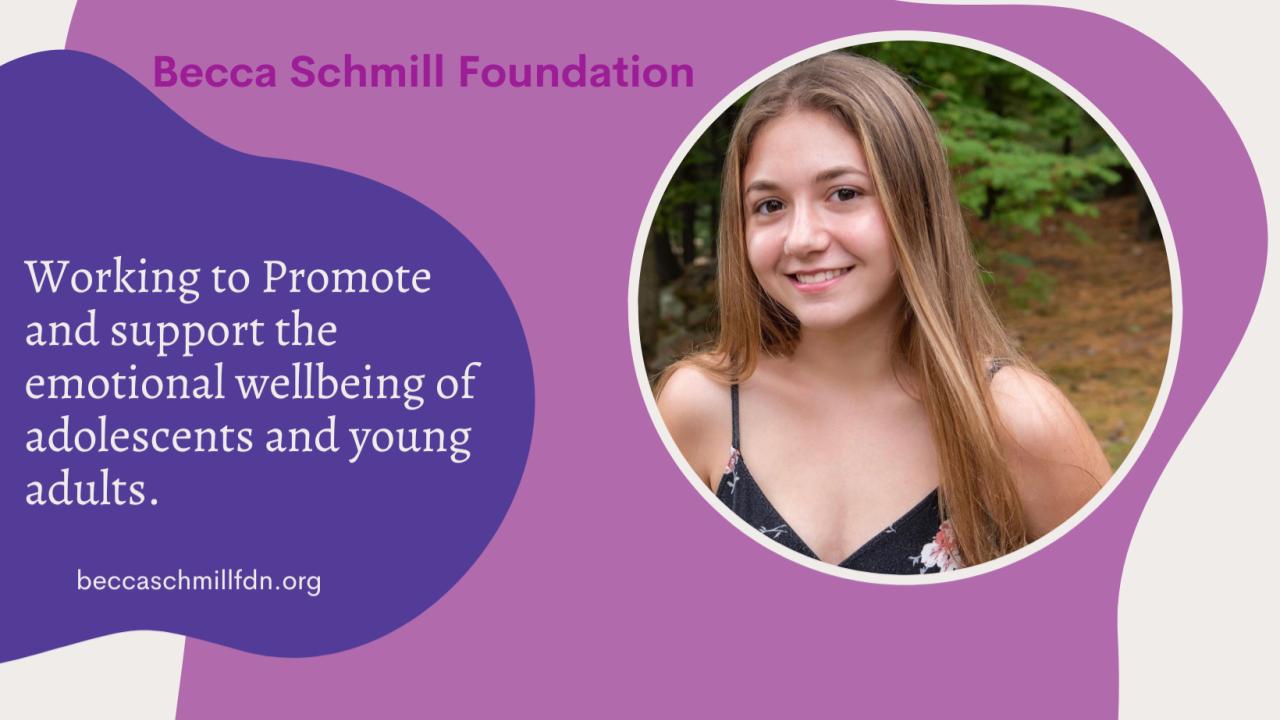
The Foundation was formed in memory of Rebecca (Becca) Mann Schmill by her loving family. Becca Schmill passed away on September 16, 2020, from fentanyl poisoning. She purchased the drugs with the assistance of a social media platform.
Becca was a kind, caring person with a gift for making those around her feel loved and appreciated. She was funny, adventurous, and determined. As a school friend said of Becca, “She managed to make those around her smile even when she wasn’t in our presence.”
At the age of 15, Becca was raped by a boy she and her friends met on a social media party chat. The rape was followed by a devastating cyberbullying incident. The two traumas left Becca with what she described as a hole in her chest. She soon started self-medicating as a way to fill that hole and cope with her pain. With just a few clicks on social media, she had access to any drug she wanted.
Becca’s story calls attention to the vulnerabilities of adolescence which are magnified in the age of social media. Today’s adolescents navigate a world that is far bigger, faster, and more chaotic than in the past. The online world they live in provides easy 24/7 access to adult content, sexual predators, and illicit street drugs, and allows children — who are by nature impulsive — to cause traumatic harm to their peers through the unescapable humiliation and permanence of cyberbullying.
The Becca Schmill Foundation’s primary objective is to prevent what happened to Becca from happening to other children.
Source: Website
Contact
Email: deb@BSFyouth.org, https://beccaschmillfdn.org/contact/
Web Links
Sexual Assualt
Source: Other
Becca was raped at the age of 15. Her trauma changed everything.
What Everyone Needs To Know
“Sexual violence occurs when a person is forced, coerced, and/ or manipulated into any unwanted sexual activity, including when they are unable to consent due to age, illness, disability, or the influence of alcohol or other drugs.” (National Sexual Violence Resource Center).
The victim is never to blame.
Common reactions to sexual trauma:
- Emotional: Guilt/shame/self-blame • Embarrassment • Fear • Sadness • Anger • Vulnerability • Isolation • Lack of control • Denial • Numbness • Confusion • and more.
- Psychological and physical: Substance use • Nightmares • Flashbacks • Depression • Difficulty concentrating • Post Traumatic Stress Disorder (PTSD) • Anxiety • Eating disorders • Low self-esteem • Increased startle response • Concerns about physical safety • Suicidal ideation • Self-harm, • Disassociation (when the brain tries to detach from reality) • and more.
- Studies have identified a significant association between child sexual abuse & compulsive sexual behavior (https://pubmed.ncbi.nlm.nih.gov/33425653/)
What BSF Is Doing
Research
BSF is currently funding a scoping study that is evaluating past research looking at the efficacy of gender-based treatment recovery outcomes for victims of sexual trauma, particularly young girls and the LGBTQ+ community.
Trauma Informed Treatment
BSF believes that victims of sexual abuse cannot heal if they don’t feel safe in their treatment environment. BSF advocates for age appropriate, trauma informed mental health & substance use treatment facilities.
Advocacy
BSF advocates at the State House and Capitol Hill for legislation that will protect children from predators, and that will improve support for adolescents and young adults who have experienced sexual trauma.
Stats
- Ages 12-34 are the highest risk years for rape and sexual assault. 18 percent of girls and 3 percent of boys say that by age 17 they have been victims of sexual assault or abuse at the hands of another adolescent. https://theconversation.com/sexual-assault-among-adolescents-6-facts-103658
- Young women are especially at risk. 82% of all juvenile victims are female. 90% of adult rape victims are female.
- The likelihood that a person suffers suicidal or depressive thoughts increases after sexual violence:
- 94% of women who are raped experience symptoms of post-traumatic stress disorder (PTSD) during the two weeks following the rape.
- 30% of women report symptoms of PTSD 9 months after the rape.
- 33% of women who are raped contemplate suicide.
- 13% of women who are raped attempt suicide.
- Approximately 70% of rape or sexual assault victims experience moderate to severe distress, a larger percentage than for any other violent crime.
- People who have been sexually assaulted are more likely to use drugs than the general public:
- 3.4 times more likely to use marijuana
- 6 times more likely to use cocaine
- 10 times more likely to use other major drugs
Source: https://www.rainn.org/statistics/victims-sexual-violence
Resources
RAINN National Sexual Assault Hotline
Free, Confidential, 24/7
1-800-656-HOPE (4673)
Boston Area Rape Crisis Center
Free, Confidential, 24/7
1-800-841-8371
Cyber Civil Rights Initiative
If you are a victim of nonconsensual pornography (“NCP”, also known as “revenge porn”), recorded sexual assault (RSA), or sextortion and you reside in the United States, please call the CCRI Crisis Helpline at
844-878-CCRI (2274)
National Sexual Violence Resource Center
Maintains a directory of organizations that list state and territory sexual assault coalitions, victim/survivor support organizations and local communities of color sexual assault organizations.
Online Harms
Children today are navigating a social world that is far more complicated than it was in past generations. What has not changed though is a child’s instincts. Children are still innately impulsive and seek immediate gratification. Social media allows them to act on their worst instincts in ways that are devastatingly harmful.
What Everyone Needs To Know
- Social Media and Youth Mental Health advisory – This 2023 advisory from the U.S. Surgeon General outlines scientific evidence on social media’s impact on youth mental health and has recommendations for policymakers, tech companies and parents, to improve online safety.
- Cyberbullying – is bullying that includes sending, posting, or sharing negative, harmful, false, or mean content about someone else. Cyberbullying is public, permanent, and extremely harmful to victims.
- Sextortion – is the threat to expose sexual images to force the victim to do something – e.g. financial payment or a sexual act. Never share compromising images or videos with anyone online (for example sexting) no matter how well you think you know them.
- Online Challenges – online dares that may spread quickly over the internet. Peer pressure or a desire for online popularity can lead to trying dangerous dares like the “Choking Challenge” which can be fatal.
- Drug traffickers have turned smartphones into a one-stop shop to market, sell, buy, and deliver deadly, fake prescription pills and other dangerous drugs. In just three steps, deadly drugs can be purchased and delivered to your home just like any other good or service.” – DEA
- Cyber Civil Rights Initiative: Information and resources for victims of nonconsensual pornography (NCP), revenge porn, and other forms of online abuse. Also includes a roster of attorneys who may be able to offer low pro-bono legal assistance. Crisis Helpline 844-878-2274
The above list is a small sample of online harms that children experience every day.
What BSF Is Doing
Research
BSF is collaborating with researchers at Boston Children’s Hospital looking at viable legislation to protect children from online harms, and documenting the excessive profits Big Tech is making off of children.
Community Events
BSF hosts and sponsors events with experts on topics related to online harms and youth mental health. BSF often collaborates with organizations from Needham, MA and surrounding areas with similar missions.
Advocacy
BSF advocates at the State and Federal levels for legislation that protects children from cyber harms. BSF advocates for Phone free school days, the passage of the Kids Online Safety Act (KOSA) and COPPA 2.O and more.
What Parents Can Do
- Put off giving your child a smartphone for as long as possible. Jonathan Haidt recommends that kids not have social media until they are at least in high school.
- Talk with your kids about the online risks. Let them know they can always come to you if they are concerned about something happening online.
- Ask them to think about how they use social media and what could go wrong.
- Acknowledge peer pressure. Help them understand what might be motivating them to try something risky.
- Model responsible online habits.
Substance Use
Anyone who has struggled to overcome addiction understands the powerful effect it has on the brain. What was once considered a matter of willpower is now understood to be a complex and chronic brain disease influenced by genetics, environment, and social and emotional factors. But despite the urgent need to develop new prevention and treatment options for addiction, little headway has been made by scientists and clinicians toward understanding this devastating disorder.”
MIT – McGovern Institute
What Everyone Needs To Know!
Unlike a decade ago, today’s drug supply is tainted with deadly synthetic opioids such as fentanyl, which can be found in:
- Fake pills marketed as real prescription Adderall, Xanax, etc.
- Cocaine, meth, and other illicit drugs.
Addiction is a brain disease, not a moral failing.
- Genetics and trauma are significant determinants.
- Stigma prevents drug users from getting the help they need.
More about Fentanyl:
- 50 times stronger than heroin and 100 times stronger than morphine.
- Since approximately 2015, deadly doses of fentanyl have been found in the illicit drugs supply in the U.S.
- Adolescents and young adults are targeted through social media apps with ads for Xanax, Adderall, Oxycontin, etc. that they believe are real, but turn out to contain deadly doses of Fentanyl
- Online dealers, called “Plugs,” often use emojis to communicate with buyers
If you or someone you know is using drugs, there are precautions that can be taken to reduce the chance of overdose. Read the basics of harm reduction here.
What BSF Is Doing
Research
BSF is currently collaborating with researchers from Boston Medical Center and Mass General Hospital on studies related to youth substance use treatment and overdose prevention.
Community Events
BSF hosts events and sponsors community programs with the goals of building awareness about overdose and risks posed by fentanyl-laced drugs, and reducing stigma associated with substance use disorder.
Advocacy
BSF advocates at the State House and on Capitol Hill for fentanyl policy and for trauma-informed, gender and age appropriate treatments for SUD.
How to protect your child
Create a Supportive Environment: Keep lines of communication open. Build a strong support network for them, including other trusted adults—family members, teachers, or counselors —who they can turn to for guidance and support.
Educate: Educate your children about the dangers of buying or accepting any drug (online or in person) that does not come from a legal pharmacy.
Stay Informed and Stay Engaged: Stay informed about the trends and threats related to online drug sales, and regularly discuss internet safety with your children.
Conversation starters – Approach conversations with openness, empathy, and without judgment.
- Have you been in situations where there were opportunities for drug or alcohol use? Did you feel pressured?
- Why do you think some teens use drugs and alcohol? What other reasons might they have? What are some healthier options you can think of?
- I’ve heard about cases where drug dealers try to connect with teenagers on social media. Has anything like that ever happened to you or any of your friends?
If your child is using illegal drugs:
- Let them know you love them and you want to help them stay safe,
- Call the SAMHSA hotline: 1-800-662-HELP (4357),
- Look up local resources: youth/family recovery coach, therapist, pediatrician,
Discuss harm reduction. https://www.safeproject.us/safety-plan/
Helpful Resources
SAMHSA’s National Helpline: 1-800-662-HELP (4357). Free, confidential, 24/7 treatment referral and information service (English and Spanish) for individuals and families facing mental and/or substance use disorders.
Partnership to End Addiction: Launched a fentanyl resource hub that provides evidence-based information for parents and caregivers.
Learn2Cope: Peer led support network for families dealing with addiction and recovery.
MASSACHUSETTS RESOURCES
Needham, MA Parent Alanon Meeting: Mondays 7:00-8:30, https://zoom.us/j/99289460651, Meeting ID: 992 8946 0651, Password: 441337 Dial in: +1 929 205 6099
MA Substance Use Information and Education Help Line: 800-327-5050