Vint Cerf

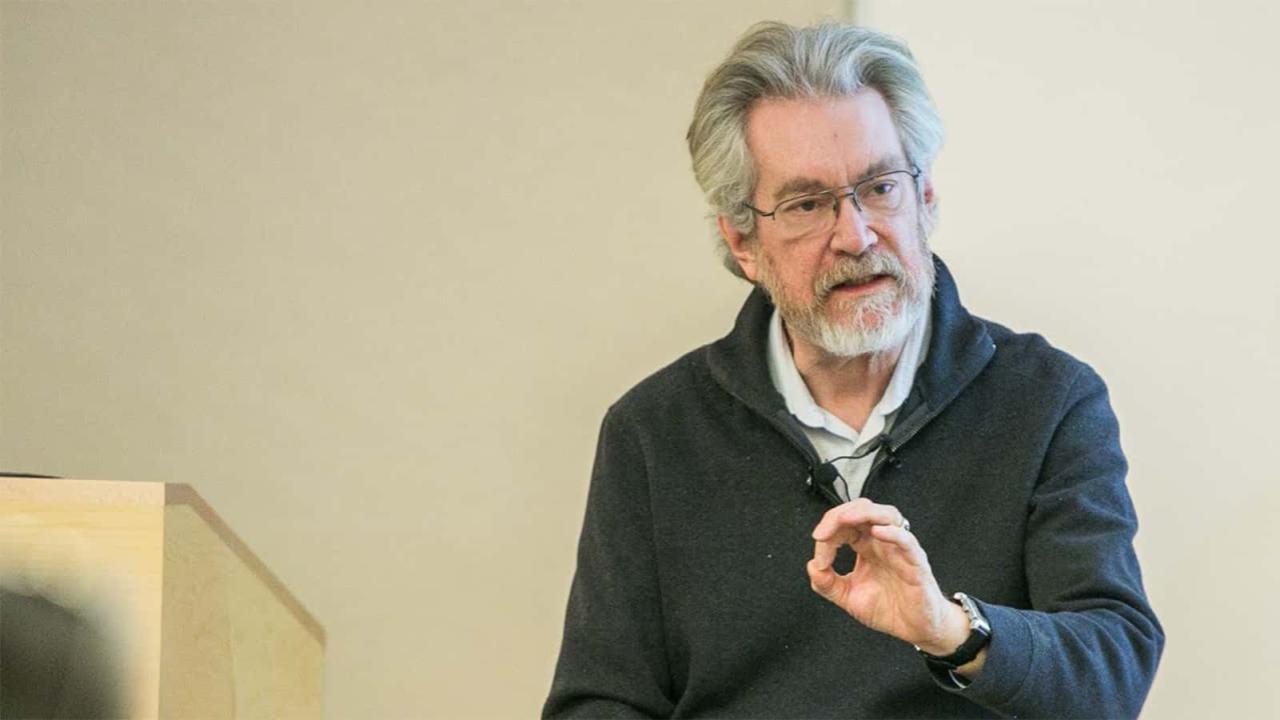
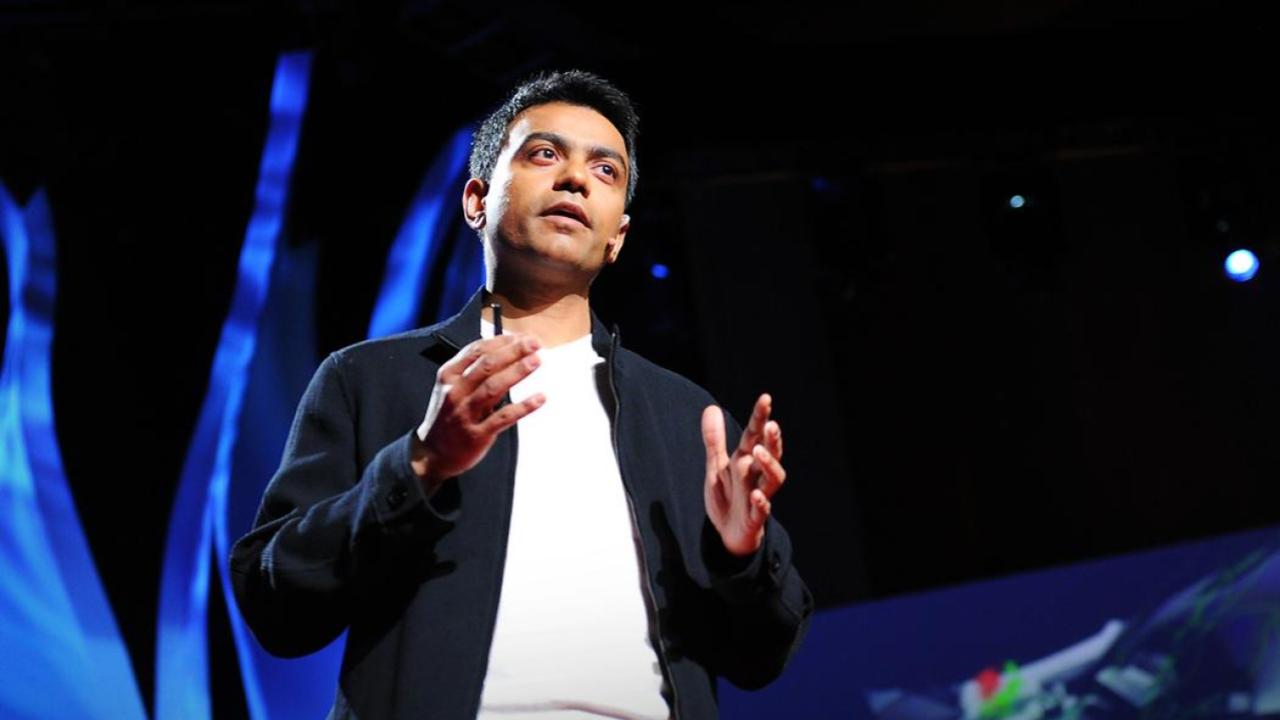
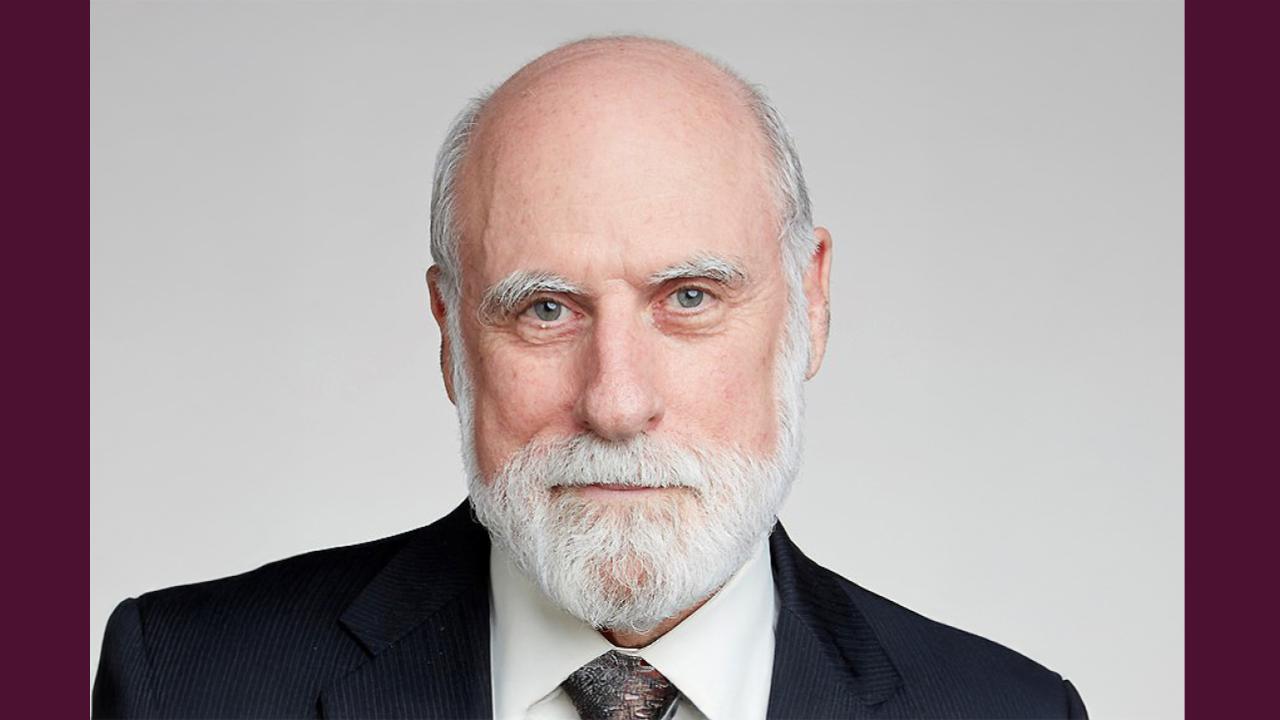
Vinton G. Cerf has served as vice president and chief Internet evangelist for Google since October 2005. In this role, he contributes to global policy development and continued standardization and spread of the Internet. He is also an active public face for Google in the Internet world.

From 1994 to 2005, Cerf served as the senior vice president of Technology Strategy for MCI. In this role, Cerf was responsible for helping to guide corporate strategy development from the technical perspective. Previously, Cerf served as MCI’s senior vice president of Architecture and Technology, leading a team of architects and engineers to design advanced networking frameworks including Internet-based solutions for delivering a combination of data, information, voice and video services for business and consumer use.

Source: Internet Hall of Fame

OnAir Post: Vint Cerf
Esther Dyson

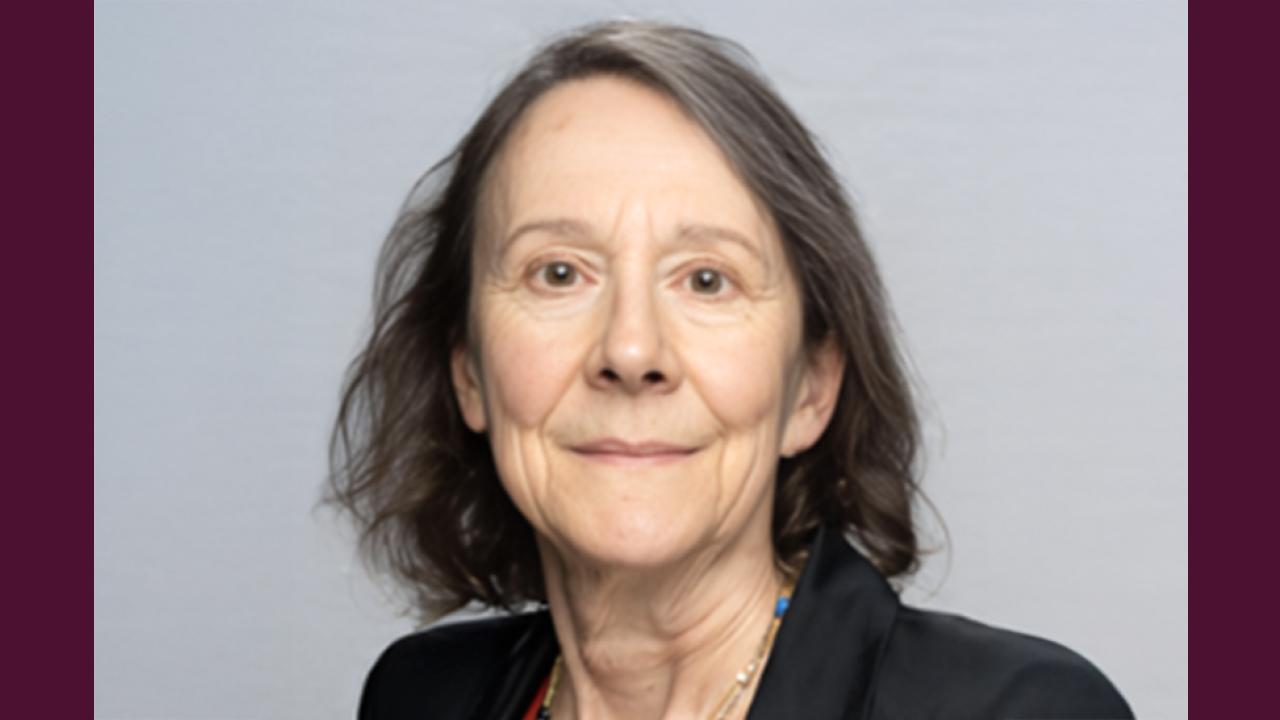
Esther Dyson (born 14 July 1951) is a Swiss-born American investor, journalist, author, commentator and philanthropist. She is the executive founder of Wellville, a nonprofit project focused on improving equitable wellbeing.

Dyson is also an angel investor focused on health care, open government, digital technology, biotechnology, and outer space. Dyson’s career now focuses on health and she continues to invest in health and technology startups.

Source: Wikipedia

OnAir Post: Esther Dyson

Joe Lubin

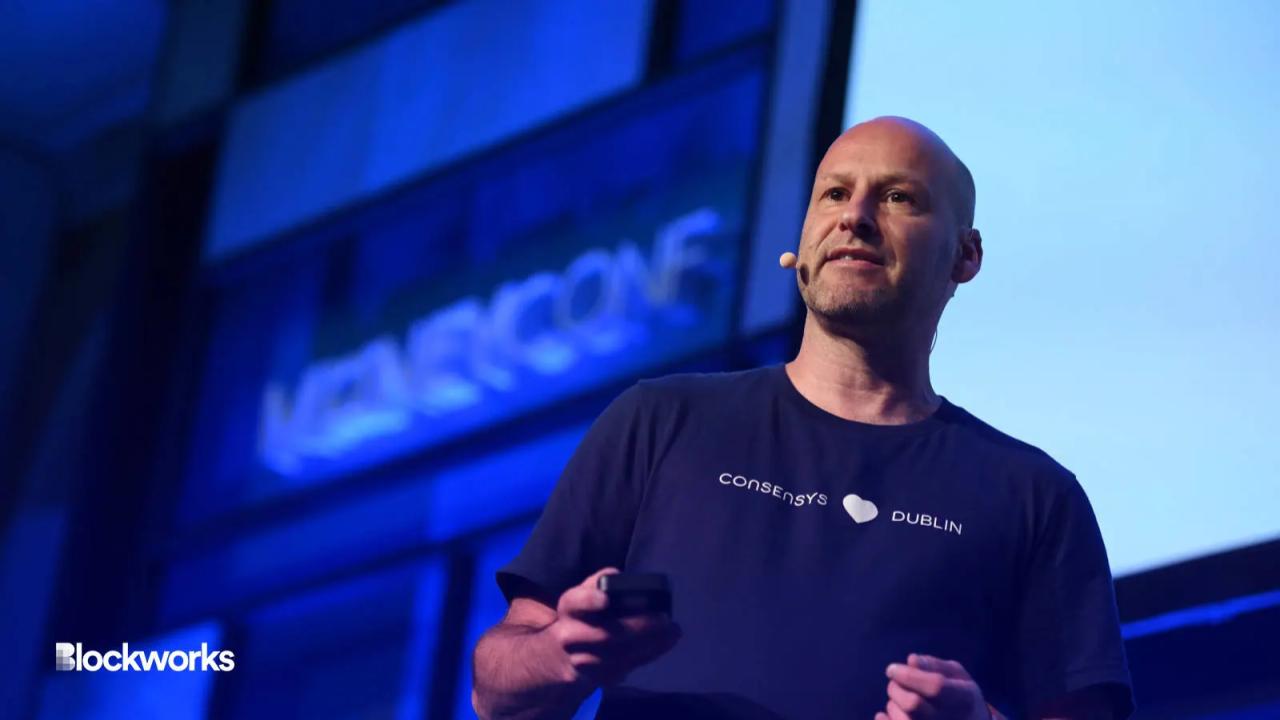
Joseph Lubin is a co-founder of Ethereum and the founder of Consensys, a full-stack, global blockchain company. Lubin has established himself as a guiding force in the fast-growing blockchain industry and a powerful advocate of decentralized technology.

Founded in 2014, Consensys has cultivated a global presence, employing top entrepreneurs, computer scientists, protocol engineers, software developers, and experts in enterprise delivery. As one of the largest and most foundational entities in the blockchain technology space, Consensys’ worldwide Mesh of people, projects and companies is building the blockchain industry’s developer tools, decentralized applications, and solutions for enterprises and governments that determined to harness the power of Ethereum. The organization was referred to by The New Yorker in 2018 as “the Ethereum community’s most prominent and ubiquitous developer and promoter of decentralized apps.”

Source: Consensys

Audrey Tang

Audrey Tank is a Taiwanese politician and free software programmer who served as the first Minister of Digital Affairs of Taiwan from August 2022 to May 2024.

A globally recognised civic-tech leader and the world’s first openly non-binary cabinet minister, Ambassador Audrey Tang has been instrumental in positioning Taiwan at the forefront of internet freedom and civic participation.

TIME named Tang to its inaugural “100 Most Influential People in AI” list in 2023 for her profound impact on leveraging technology for public good.

Source: Project Liberty

Scott Joy

Chair, onAir Tech, a Public Benefit Corporation
Curation Director,  onAir Networks, a 501 c3
Chair, Future onAir Advisory Board

Interests:  Knowledge Networks, Catalyzing Innovation, Tech Entrepreneurship, Healthy and Sustainable Communities

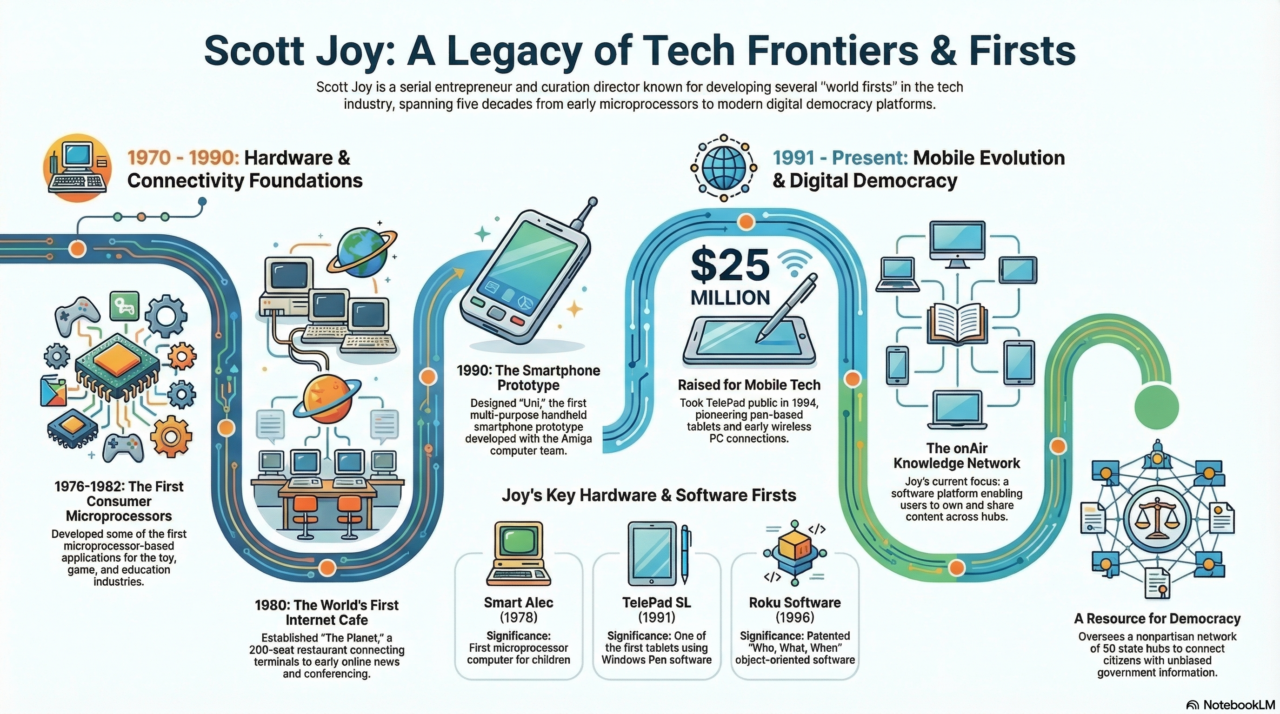
Pioneer in identifying, developing, and applying new information and communication technologies:

  • The first consumer applications of the microprocessor (4bit & LSIs) … for the toy and game industry and for education
  • The first internet cafe with online news, games, and computer conferencing
  • The first prototype smartphone working with the developers of the Amiga computer, the first graphical computer

My current focus is developing a network of onAir hubs based on a new knowledge sharing software platform with many unique features such as enabling authors to own and share their content across multiple public and custom Hubs.   Current hub that is being established to bring together people interested in implementing a People’s Internet is at people.onair.cc.

OnAir Post: Scott Joy

Tim Berners-Lee

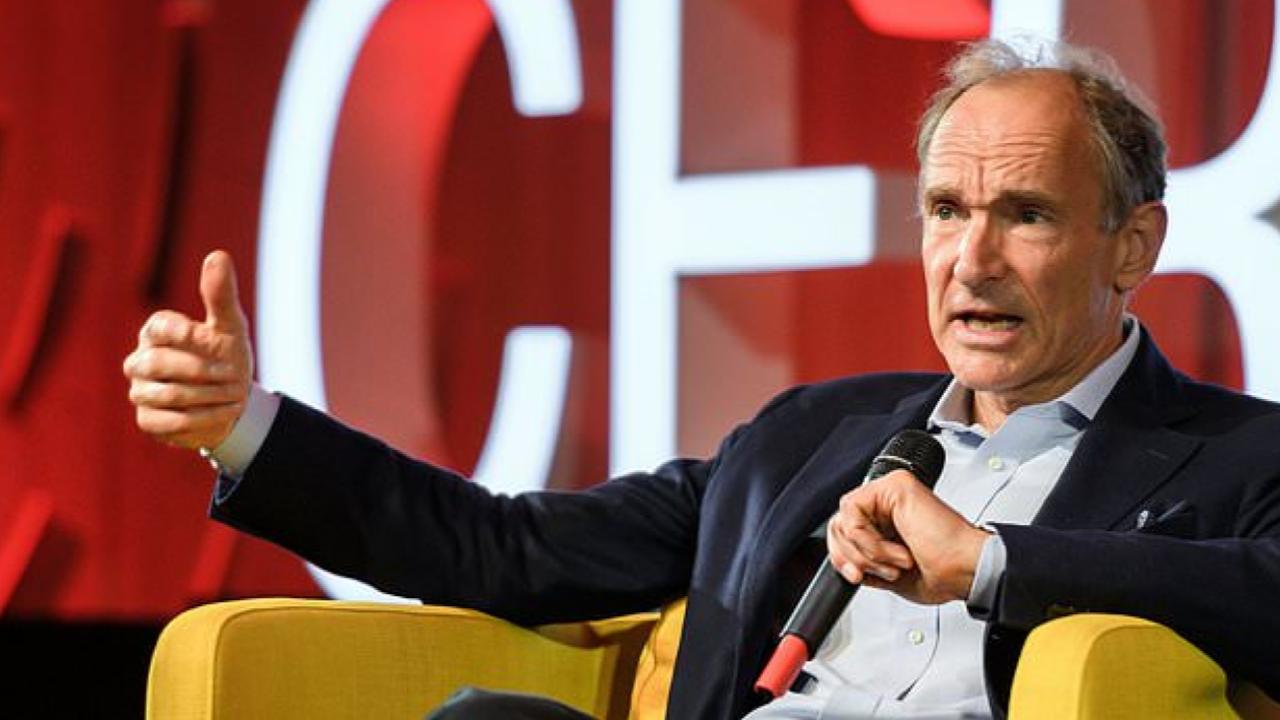
Sir Tim Berners-Lee invented the World Wide Web while at CERN, the European Particle Physics Laboratory, in 1989. He wrote the first web client and server in 1990. His specifications of URIs, HTTP and HTML were refined as Web technology spread.

He is the co-founder and CTO of Inrupt.com, a tech start-up that uses, promotes and helps develop the open source Solid platform. Solid aims to give people control and agency over their data, questioning many assumptions about how the web has to work. Solid technically is a new level of standard at the web layer, which adds features never put into the original spec, such as global single sign-on, universal access control, and a universal data API so that any app can store data in any storage place. Socially Solid is a movement away from much of the issues with the current WWW, and toward a world in which users are in control, and empowered by large amounts of data, private, shared, and public.

Source: W3 Consortium

Braxton Woodham

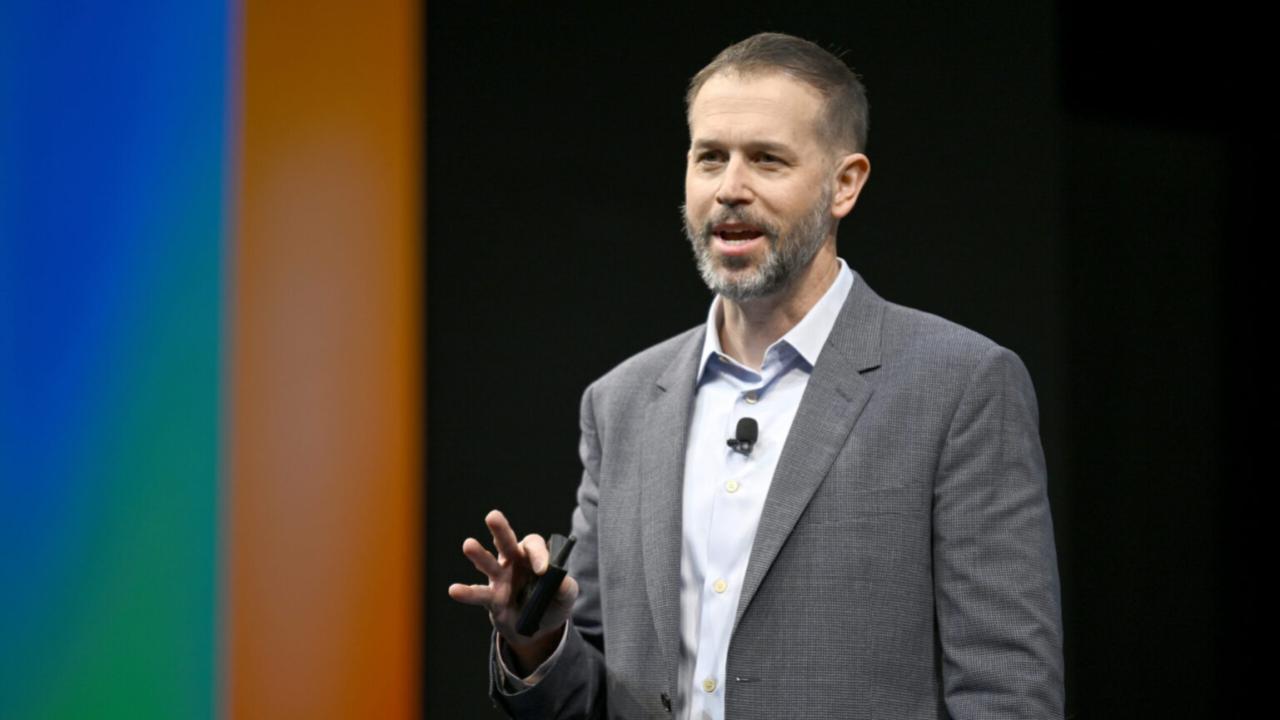
Braxton Woodham, Co-Founder of Frequency, is a technology leader with 20+ years of experience building scalable platforms. At Project Liberty, he develops infrastructure for decentralized social networking.

Previously, he led product and technology at Fandango, co-founded Sun Basket and kuma.capital, and built Tap11, a real-time media analytics platform. He also held key roles at Sony Music and InfoSpace.

Braxton began his career as a Lead Propulsion Engineer for Atlas missions and served as a U.S. Air Force Captain. He holds a BE in Mechanical Engineering from Vanderbilt University.

Source: Coindesk

OnAir Post: Braxton Woodham

Alex Ohanian

Son of an undocumented immigrant. Business Dad.

Source: Personal Website

Alex Pentland

Professor Alex ‘Sandy’ Pentland has helped create and direct the MIT Media Lab and the Media Lab Asia in India, and is  a HAI Fellow at Stanford.

He is one of the most-cited  computational scientists in the world, and Forbes declared him one of the “7 most powerful data scientists in the world” along with Google founders and the Chief Technical Officer of the United States.

He co-led the World Economic Forum discussion in Davos that led to the EU privacy regulation GDPR, and was one of the UN Secretary General’s  “Data Revolutionaries” helping to forge the transparency and accountability mechanisms in the UN’s Sustainable Development Goals.

He has received numerous awards and distinctions such as  MIT’s Toshiba endowed chair, election to the U.S. Academy of Engineering, the McKinsey Award from Harvard Business Review, the 40th Anniversary of the Internet from DARPA, and the Brandeis Award for work in privacy.

Source: MIT Website

Deb Roy

Deb Roy is professor of Media Arts and Sciences at MIT where he directs the MIT Center for Constructive Communication (CCC).

He leads research in designing human-AI systems that foster dialogue, listening, and deliberation in ways that build civic muscle.

Roy is also co-founder and unpaid CEO of Cortico, a closely affiliated nonprofit collaborator of CCC that develops, operates and supports a conversation platform designed to surface underheard voices and perspectives and create scalable dialogue networks.

Source: MIT

Skip to toolbar