Summary
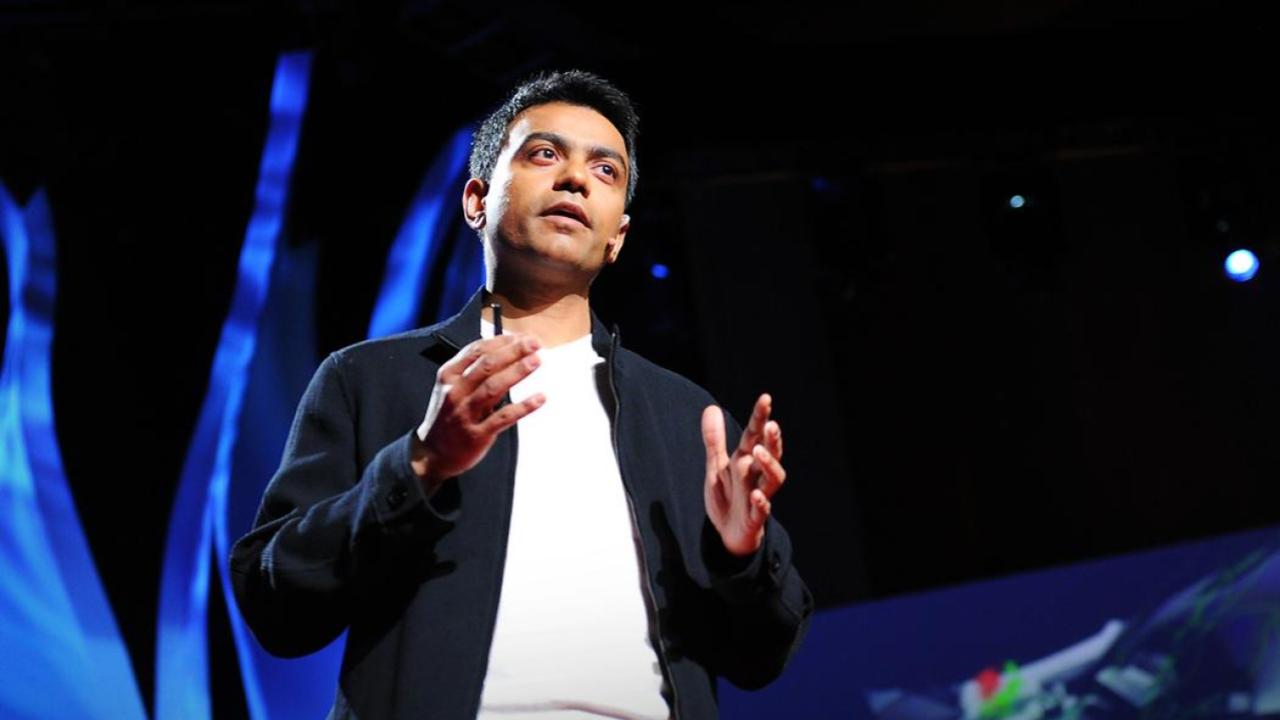
Deb Roy is professor of Media Arts and Sciences at MIT where he directs the MIT Center for Constructive Communication (CCC).
He leads research in designing human-AI systems that foster dialogue, listening, and deliberation in ways that build civic muscle.
Roy is also co-founder and unpaid CEO of Cortico, a closely affiliated nonprofit collaborator of CCC that develops, operates and supports a conversation platform designed to surface underheard voices and perspectives and create scalable dialogue networks.
Source: MIT
About
Roy serves on the board of the Knight First Amendment Institute, the FRONTLINE advisory council, and is a faculty associate at the Berkman Klein Center for Internet & Society at Harvard University.
Previously, Roy was a visiting professor at Harvard Law School (2021-22), and served as executive director of the MIT Media Lab (2019-2021), where CCC is based. He has served on the Knight Commission on Trust, Media, and Democracy and the Aspen Institute’s Commission on Information Disorder.
While on leave from MIT, Roy co-founded and was CEO of Bluefin Labs, a media analytics company that analyzed the interactions between television and social media at scale. Bluefin was acquired by Twitter in 2013, Twitter’s largest acquisition to date. From 2013-2017 Roy served as Twitter’s chief media scientist.
Roy is the author of over 185 academic papers including a study of the spread of false news that was the cover story of Science magazine in 2018 and cited as one of the most influential academic publications of the year. His 2023 essay in The Atlantic describes his journey from studying social media to creating dialogue networks, his 2024 Atlantic essay explores ways to tackle truth decay, and his 2026 Atlantic essay diagnoses the accountability gap opened AI chatbots. Roy’s widely viewed TED talk Birth of a Word presents his pioneering research on his son’s language development that led to new ideas in media analytics.
A native of Canada, Deb was born and raised in Winnipeg and spent large parts of his childhood in Calcutta. He received his Bachelor of Applied Science from the University of Waterloo and PhD in Media Arts and Sciences from MIT.
Biography

Roy serves on the board of the Knight First Amendment Institute, the FRONTLINE advisory council, and is a faculty associate at the Berkman Klein Center for Internet & Society at Harvard University.
Previously, Roy was a visiting professor at Harvard Law School (2021-22), and served as executive director of the MIT Media Lab (2019-2021), where CCC is based. He has served on the Knight Commission on Trust, Media, and Democracy and the Aspen Institute’s Commission on Information Disorder.
While on leave from MIT, Roy co-founded and was CEO of Bluefin Labs, a media analytics company that analyzed the interactions between television and social media at scale. Bluefin was acquired by Twitter in 2013, Twitter’s largest acquisition to date. From 2013-2017 Roy served as Twitter’s chief media scientist.
Roy is the author of over 185 academic papers including a study of the spread of false news that was the cover story of Science magazine in 2018 and cited as one of the most influential academic publications of the year. His 2023 essay in The Atlantic describes his journey from studying social media to creating dialogue networks, his 2024 Atlantic essay explores ways to tackle truth decay, and his 2026 Atlantic essay diagnoses the accountability gap opened AI chatbots. Roy’s widely viewed TED talk Birth of a Word presents his pioneering research on his son’s language development that led to new ideas in media analytics.
A native of Canada, Deb was born and raised in Winnipeg and spent large parts of his childhood in Calcutta. He received his Bachelor of Applied Science from the University of Waterloo and PhD in Media Arts and Sciences from MIT.
Source: MIT
Web Links
Videos
Deb Roy reflects on machine learning and language modeling
October 3, 2025 (03:04)
By: MIT Media Lab
Media Lab Professor Deb Roy traces his path from studying how robots learn to founding the MIT Center for Constructive Communication (MIT CCC). The MIT CCC brings together researchers in AI, computational social science, digital interactive design, and learning technologies with software engineers, journalists, artists, public health experts, and community organizers to explore and address the effects of deepening societal fragmentation in America.
Selected Publications
Words Without Consequence
The Atlantic, 2026Argues that large language models produce speech that is behaviorally fluent but morally empty—carrying the force of promises, apologies, and advice without any speaker who bears consequence—eroding the conditions of dignity and accountability that make human language meaningful.
Conversation Networks
arXiv, 2025 (with Lawrence Lessig and Audrey Tang)Introduces a model for “conversation networks”—an alternative to social media (networks) designed to foster social connections, inform policy making, and strengthen democratic institutions at scale.
A Way to Put Public Thought in Front of Policymakers
Conference on Democratic “Frontsliding”, Princeton University, 2025 (with Kathy Cramer). Explores mechanisms for linking public deliberation with policymaking, aiming to close the gap between everyday civic voice and institutional decision-making.
How to Tackle Truth Decay
The Atlantic, 2024Argues that combating misinformation requires more than correcting falsehoods—it calls for fostering shared understanding through sustained, credible public communication, deliberation, and engagement.
The Internet Could Be So Good. Really.
The Atlantic, 2023Outlines a vision for reimagining the internet as infrastructure for civic life—designed to support deep conversation, collective understanding, and community resilience.
The Internet Needs You-Are-Here Maps
WIRED, 2022 (with Nabeel Gillani)Proposes interactive “maps” of the online information space to help users understand their own digital environments and discover perspectives beyond their usual feeds.
The Spread of True and False News Online
Science, 2018 (with Soroush Vosoughi and Sinan Aral)Demonstrates that false news spreads faster and more widely than true stories on Twitter, possibly driven by novelty and emotional engagement—highlighting structural flaws in social media design.
Journalists and Trump Voters Live in Separate Online Bubbles
Vice News, 2016Reveals deep divides in the social networks of journalists and conservative voters, offering early evidence of the information silos contributing to political polarization.
How Digital Transparency Became a Force of Nature
Scientific American, 2015 (with Daniel Dennett)Explores how digital transparency is disrupting traditional structures of trust and authority, as once-private actions become exposed to public scrutiny and institutional norms struggle to keep pace.
Wikipedia
Deb Roy is a Canadian scientist, tenured professor at Massachusetts Institute of Technology (MIT), and the director of the MIT Center for Constructive Communication.
Biography
Roy received a bachelor of applied science in computer engineering from the University of Waterloo, and a PhD in Media Arts and Sciences from MIT.[1] He previously was the executive director of the MIT Media Lab and directed the Cognitive Machines group at the Media Lab,[2] and the Laboratory for Social Machines.
Roy conducts research on language, games, and social dynamics at the intersection of artificial intelligence and cognitive psychology. An author of over 150 academic papers[3][4] in machine learning, cognitive modeling, and human-machine interaction, his TED Talk, Birth of a Word (based on the 2006–2009 Human Speechome Project), has been viewed over 2.8 million times.[5]
In 2008, he co-founded and was the founding CEO of Bluefin Labs, a social TV analytics company, which MIT Technology Review named as one of the 50 most innovative companies of 2012.[6] Bluefin was acquired by Twitter in 2013,[7] and Roy served as chief media scientist of Twitter from 2013 to 2017. He is also co-founder and chairman of Cortico, a nonprofit media technology company whose Local Voices Network aims to foster constructive public conversations across political and cultural divides.[8]
The Laboratory for Social Machines started in 2014 with an investment of $10 million from Twitter over a five-year period.[9] The agreement also gives the lab access to all historical Twitter data and access to the firehose of all real-time tweets. The lab aims to "create new platforms for both individuals and institutions to identify, discuss, and act on pressing societal problems."[9]
In 2018, Soroush Vosoughi, Deb Roy, and Sinan Aral published "The spread of true and false news online" in Science.[10] The paper examined "~126,000 stories tweeted by ~3 million people more than 4.5 million times," and found that "Falsehood diffused significantly farther, faster, deeper, and more broadly than the truth in all categories of information, and the effects were more pronounced for false political news than for false news about terrorism, natural disasters, science, urban legends, or financial information." Additionally, the authors found that "Contrary to conventional wisdom, robots accelerated the spread of true and false news at the same rate, implying that false news spreads more than the truth because humans, not robots, are more likely to spread it."
See also
References
- ↑ "Deb Roy | Laboratory for Social Machines". Retrieved 2020-02-11.
- ↑ "Cognitive Machines Group". www.media.mit.edu.
- ↑ "Deb Roy's publications page". socialmachines.media.mit.edu.
- ↑ "Deb Roy – Google Scholar Citations". scholar.google.com. Retrieved 2020-02-11.
- ↑ "Birth of a Word TED talk". www.ted.com.
- ↑ "Technology Review's top 50 disruptive companies in 2012". technologyreview.com. Archived from the original on 2012-10-20. Retrieved 2013-08-14.
- ↑ Stelter, Brian (February 5, 2013). "Twitter Buys Company That Mines Chatter About TV". The New York Times.
- ↑ "Cortico". Cortico. Retrieved 2020-02-11.
- 1 2 "MIT launches Laboratory for Social Machines with major Twitter investment". MIT News. 1 October 2014. Retrieved 6 October 2014.
- ↑ Vosoughi, Soroush; Roy, Deb; Aral, Sinan (2018-03-09). "The spread of true and false news online". Science. 359 (6380): 1146–1151. Bibcode:2018Sci...359.1146V. doi:10.1126/science.aap9559. ISSN 0036-8075. PMID 29590045. S2CID 4549072.