Solid Protocol

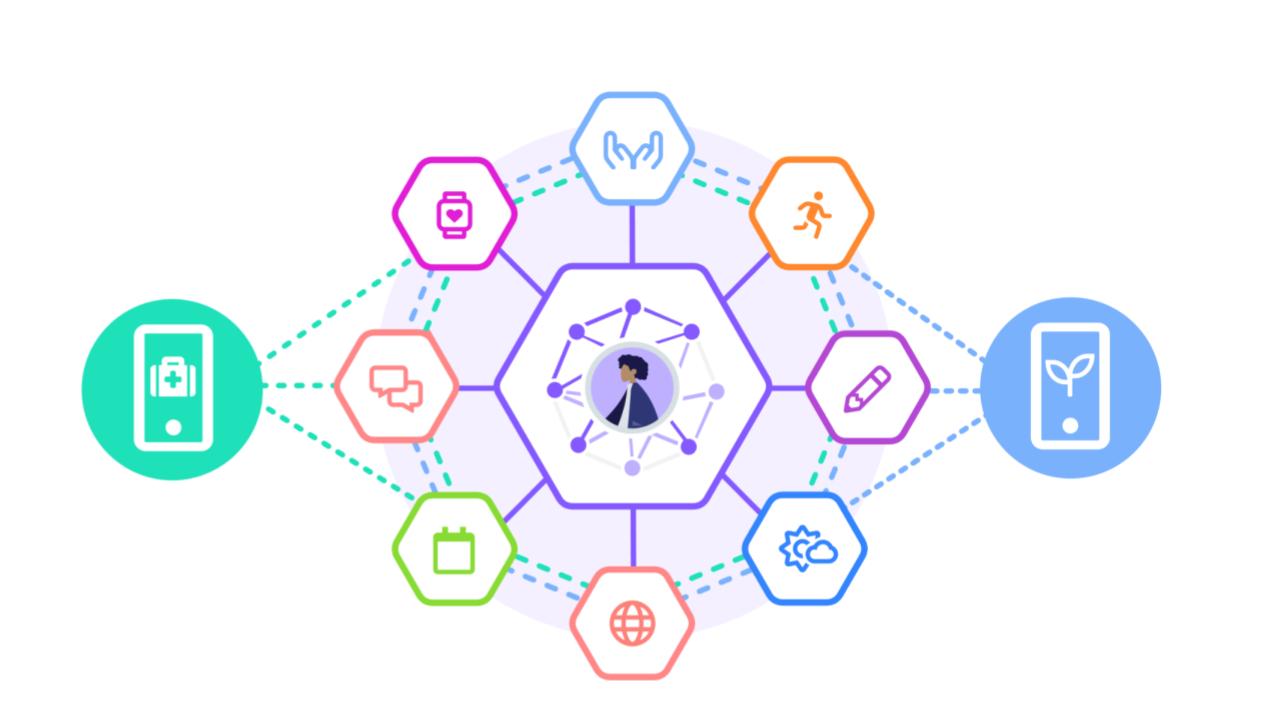
Imagine having your own online storage, which you control. You store information once and decide who can access what, when you need services like mortgage applications or medical care.

This is what Solid can do. It’s a bit like carrying all your data in a rucksack (backpack) with lots of pockets. To access the data, different apps can only open the pocket you allow them to open, rather than taking the whole rucksack. The rest stays private.

Solid lets people take control of their data and combine it to achieve new results. It gives creators new collaborative tools while passing power back to users. It’s technology that returns the web to its original vision of serving people.

Source: Solid Website

OnAir Post: Solid Protocol
DSNP – Decentralized Social Networking Protocol

DSNP stands for Decentralized Social Networking Protocol, which is an open protocol and potential standard for social networking and social media. It is not owned or controlled by any one person or company, allowing anyone to build on it or use it. DSNP is stewarded by Project Liberty Institute, a 501(c)(3).

DSNP is an open-source social media protocol designed to decentralize data ownership, allow easier cross-platform interaction, and let users regain control over their personal data. This includes posts, connections, and messages. The decentralized approach allows users to retain ownership of their information and move it between platforms without relying on a single provider.

OnAir Post: DSNP – Decentralized Social Networking Protocol

AT Protocol

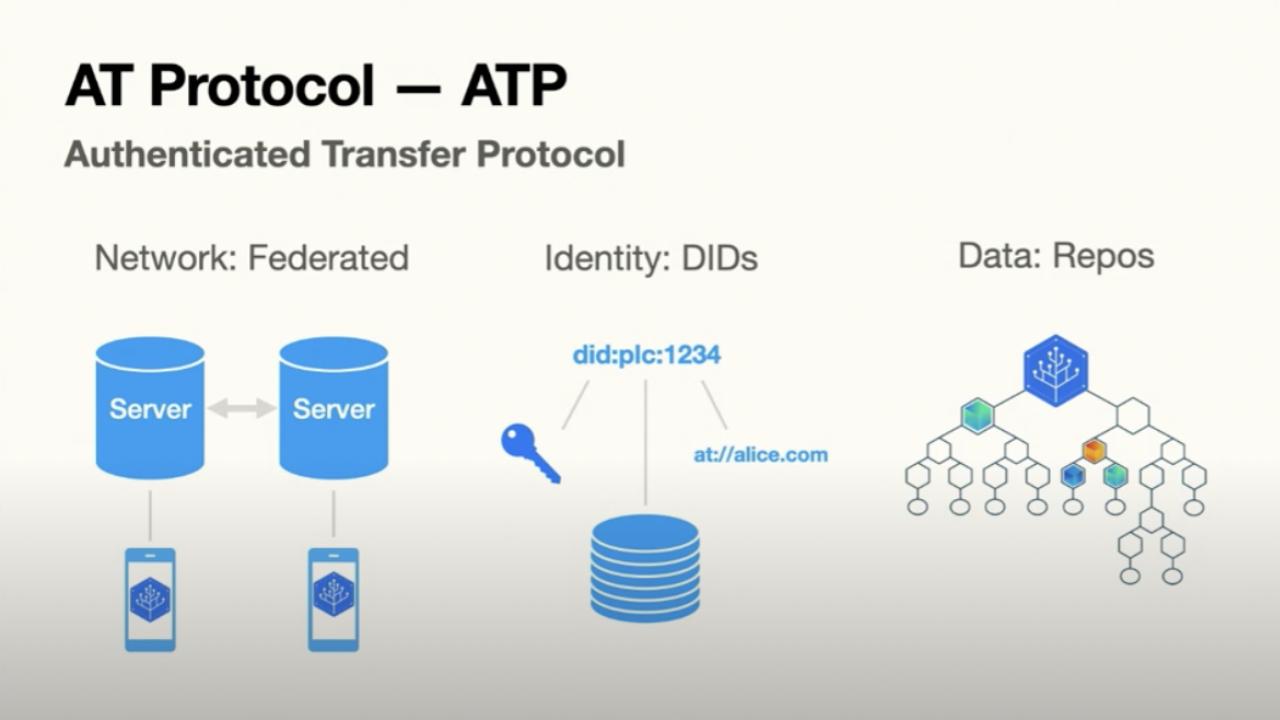
The AT Protocol (Authenticated Transfer Protocol, or atproto) is a standard for public conversation and an open-source framework for building social apps.

It creates a standard format for user identity, follows, and data on social apps, allowing apps to interoperate and users to move across them freely. It is a federated network with account portability.

Source: Bluesky

OnAir Post: AT Protocol

Activity Pub

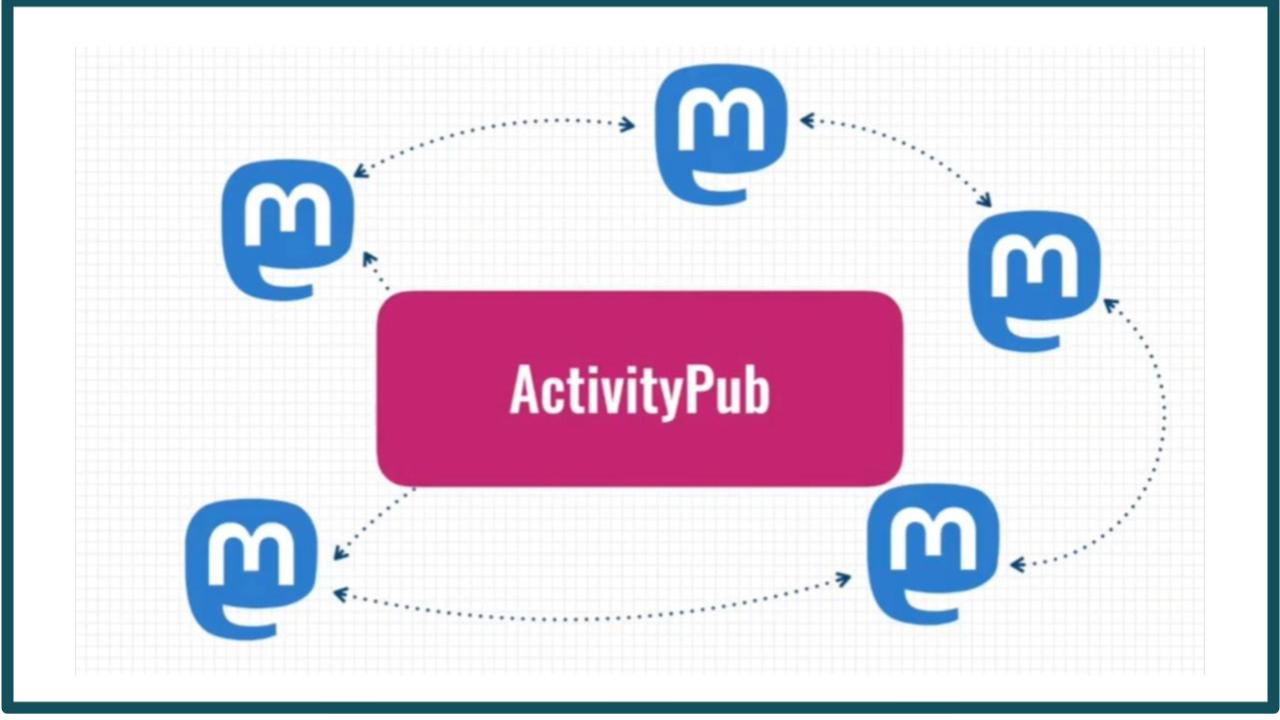
ActivityPub is a protocol and open standard for decentralized social networking. It provides a client-to-server (C2S) API for creating and modifying content, as well as a federated server-to-server (S2S) protocol for delivering notifications and content to other servers.

ActivityPub has become the main standard used in the fediverse, a popular network used for social networking that consists of software such as Mastodon, Pixelfed and PeerTube.

OnAir Post: Activity Pub

Frequency Protocol

Frequency is a blockchain designed to support decentralized social networks to give people control over their online presence. With Frequency, users can freely choose and connect on social apps while retaining ownership of their data.

Built on the Decentralized Social Networking Protocol (DSNP), Frequency offers scalable tools for message discovery, flexible storage for social and identity data, and a unique cost-sharing model that allows apps to deliver smooth, secure experiences that put users in charge.

OnAir Post: Frequency Protocol

Tim Berners-Lee

Sir Tim Berners-Lee invented the World Wide Web while at CERN, the European Particle Physics Laboratory, in 1989. He wrote the first web client and server in 1990. His specifications of URIs, HTTP and HTML were refined as Web technology spread.

He is the co-founder and CTO of Inrupt.com, a tech start-up that uses, promotes and helps develop the open source Solid platform. Solid aims to give people control and agency over their data, questioning many assumptions about how the web has to work. Solid technically is a new level of standard at the web layer, which adds features never put into the original spec, such as global single sign-on, universal access control, and a universal data API so that any app can store data in any storage place. Socially Solid is a movement away from much of the issues with the current WWW, and toward a world in which users are in control, and empowered by large amounts of data, private, shared, and public.

Source: W3 Consortium

OnAir Post: Tim Berners-Lee

Skip to toolbar