About
Source: Website
About the Anxious Generation Movement
The Anxious Generation boils down to one key thesis: we have overprotected our kids in the real world, and underprotected them online.
Around 2012, something changed across multiple countries: teen mental health fell off a cliff. After more than a decade of stability, rates of depression, anxiety, self-harm, and suicide began rising sharply, more than doubling by many measures. This surge was concentrated almost entirely among adolescents and young adults. Why?
In his book, Jonathan Haidt makes the case that only one theory explains the data: in the course of just a few years, childhood was rewired from play-based to phone-based.
From a Book to a Movement
The book catalyzed a movement around the world. Haidt and a small, strategic team began running a public health campaign (TAG) focused on changing policy, culture, and behavior. TAG’s mission: dismantle the phone-based childhood and revitalize play, independence, and responsibility in the real world.
The results have been remarkable. Schools, states, and even entire countries have implemented phone-free school policies. Australia raised the minimum age to open social media accounts to 16, and other countries are following suit. The movement is entirely bipartisan — with US states passing phone free schools legislation at unprecedented rates. Hundreds of new parent- and youth-led initiatives have emerged to drive change at the grassroots level. And the momentum isn’t stopping.
Source: Website
Our Work
We change policy, culture, and behavior through collective action — so every child grows up with more play, independence, and real-world connection, and less time online. Here’s how we do it:
- Policy
Backed by momentum from across the U.S. and globally, our policy strategy builds on what works, responds to urgent needs, and offers a roadmap for lawmakers and communities.
- Culture
We create culturally sticky campaigns that shift norms, in partnership with brands, influencers, celebrities, and culture makers. Together, we make real-world childhood aspirational. - Behavior
We empower parents, young people, and communities to reclaim childhood. By supporting change at home, in schools, and locally, we help families delay smartphones and rediscover play.
Source: Website
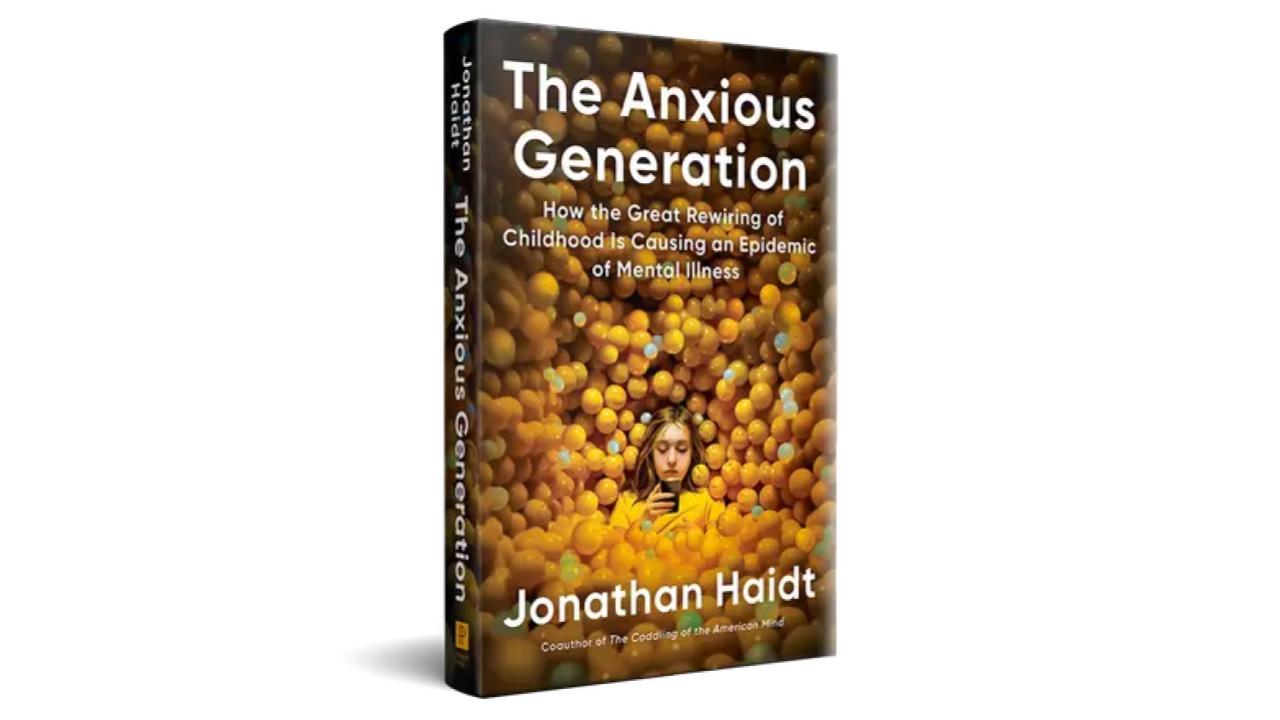
The Anxious Generation
Source: Other
The Anxious Generation
How the Great Rewiring of Childhood is Causing an Epidemic of Mental Illness
By Jonathan Haidt
THE INSTANT #1 NEW YORK TIMES BESTSELLER
From New York Times bestselling coauthor of The Coddling of the American Mind, an essential investigation into the collapse of youth mental health-and a plan for a healthier, freer childhood.
After more than a decade of stability or improvement, the mental health of adolescents plunged in the early 2010s. Rates of depression, anxiety, self-harm, and suicide rose sharply, more than doubling on most measures. Why?
In The Anxious Generation, social psychologist Jonathan Haidt lays out the facts about the epidemic of teen mental illness that hit many countries at the same time. He then investigates the nature of childhood, including why children need play and independent exploration to mature into competent, thriving adults. Haidt shows how the “play-based childhood” began to decline in the 1980s, and how it was finally wiped out by the arrival of the “phone-based childhood” in the early 2010s. He presents more than a dozen mechanisms by which this “great rewiring of childhood” has interfered with children’s social and neurological development, covering everything from sleep deprivation to attention fragmentation, addiction, loneliness, social contagion, social comparison, and perfectionism. He explains why social media damages girls more than boys and why boys have been withdrawing from the real world into the virtual world, with disastrous consequences for themselves, their families, and their societies.
Most important, Haidt issues a clear call to action. He diagnoses the “collective action problems” that trap us, and then proposes four simple rules that might set us free. He describes steps that parents, teachers, schools, tech companies, and governments can take to end the epidemic of mental illness and restore a more humane childhood.
Haidt has spent his career speaking truth backed by data in the most difficult landscapes — communities polarized by politics and religion, campuses battling culture wars, and now the public health emergency faced by Gen Z. We cannot afford to ignore his findings about protecting our children — and ourselvesfrom the psychological damage of a phone-based life.