Summary
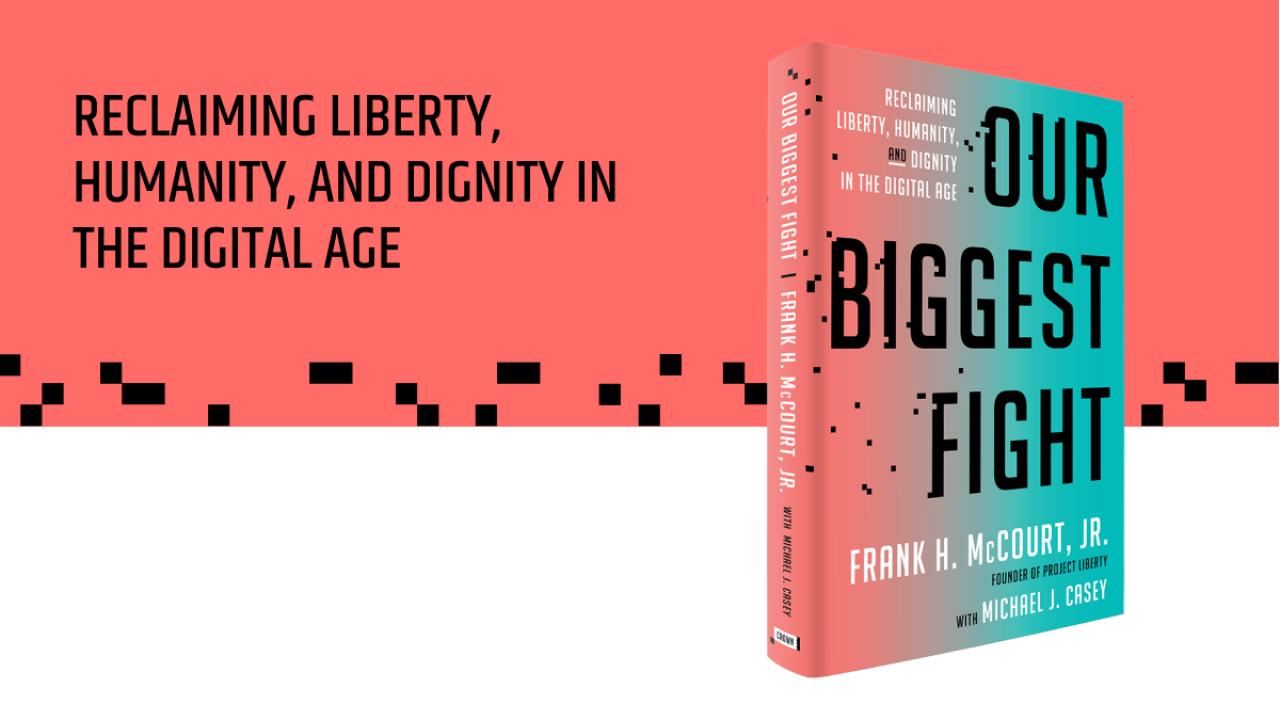
The internet as we know it is broken. Here’s how we can seize back control of our lives from the corporate algorithms and create a better internet—before it’s too late.
OnAir Post: Our Biggest Fight
About
Authors
Frank H. McCourt, Jr.
Frank H. McCourt, Jr. is a civic entrepreneur and the executive chairman and former CEO of McCourt Global, a private family company committed to building a better future through its work across the real estate, sports, technology, media, and capital investment industries, as well as its significant philanthropic activities. Frank is proud to extend his family’s 130-year legacy of merging community and social impact with financial results, an approach that started when the original McCourt Company was launched in Boston in 1893.
He is a passionate supporter of multiple academic, civic, and cultural institutions and initiatives. He is the founder and executive chairman of Project Liberty, a far-reaching, $500 million initiative to transform the internet through a new, equitable technology infrastructure and rebuild social media in a way that enables users to own and control their personal data. The project includes the development of a groundbreaking, open-source internet protocol called the Decentralized Social Networking Protocol (DSNP), which will be owned by the public to serve as a new web infrastructure. It also includes the creation of Project Liberty’s Institute (formerly The McCourt Institute,) launched with founding partners Georgetown University in Washington, D.C., Stanford University in Palo Alto, CA, and Sciences Po in Paris, to advance research, bring together technologists and social scientists, and develop a governance model for the internet’s next era.
Frank has served on Georgetown University’s Board of Directors for many years and, in 2013, made a $100 million founding investment to create Georgetown University’s McCourt School of Public Policy. He expanded on this in 2021 with a $100 million investment to catalyze an inclusive pipeline of public policy leaders and put the school on a path to becoming tuition-free.
Frank owns the French football club Olympique de Marseille and formerly owned the Los Angeles Dodgers. With family roots in the construction business dating back to the late 19th century, Frank has built upon this history with initiatives ranging from the development of Boston’s Seaport to large, mixed-use projects in Dallas, London, Miami, New York City, and elsewhere.
Frank graduated from Georgetown University. He is married to Monica McCourt and is the proud father of seven.
Michael J. Casey
Michael Casey is Chief Content Officer at CoinDesk, the leading provider of news, events, and data and indices for the blockchain and digital asset community. He is also a senior advisor at MIT Media Lab’s Digital Currency Initiative.
Until he joined MIT in 2015, Casey was a senior columnist covering global finance at The Wall Street Journal. He has published five acclaimed books, including The Age of Cryptocurrency: How Bitcoin and Digital Money are Challenging the Global Economic Order, co-authored Paul Vigna.
Web Links
Key Insights
Together, these five insights represent a roadmap for how to upgrade the internet and build the infrastructure needed to support a healthier version of the web.
Insight 1: The Internet is Broken
The internet’s flawed architecture has led to a broken user experience that’s fueling a youth mental health crisis, the spread of misinformation, breakdowns in civil discourse, and threats to democracy. Today’s polarization and our inability to solve problems is directly linked to the technology we use to live, learn, work, and communicate. Its architecture has been co-opted and corrupted by Big Tech platforms that are hoarding the value we create online while society is paying the price.
Insight 2: It Doesn’t Have to Be This Way
Shifting power from dominant platforms to people and returning data control to individuals will revolutionize both the digital and physical worlds. But this level of systemic change is possible. Project Liberty’s open-source Decentralized Social Networking Protocol (DSNP) enables users to reclaim and control their data and can support a healthier digital ecosystem, where apps are interoperable, data is portable, and platforms must adhere to our terms.
Insight 3: Data is Personal
Our digital data is deeply personal and central to our identity, yet it’s often exploited by tech giants for profit, leading to dehumanization and societal harm. By prioritizing human values and redesigning technology accordingly, we can harness the internet’s potential for positive impact and break free from Big Tech’s surveillance, exploitation, and manipulation.
Insight 4: A Decentralized Web Is Good for Prosperity
The immense wealth and control amassed by tech giants highlights the value of data which, if accessible to individual users in a new internet era, will foster massive economic innovation and growth. Ensuring digital property rights will fuel unprecedented progress, offering everyone the opportunity to participate and benefit from a new, healthier digital economy.
Insight 5: Time is of the Essence
We’re dangerously off course from an internet that was originally designed to bring people together. With the emergence of AI, we’re inching closer to a full unraveling of our social fabric. Fortunately, we can choose to build a better future. But we need to act now. Project Liberty and its growing network of partners are optimistic that if we seize this moment to redesign the internet, our best days lie ahead. Join us.